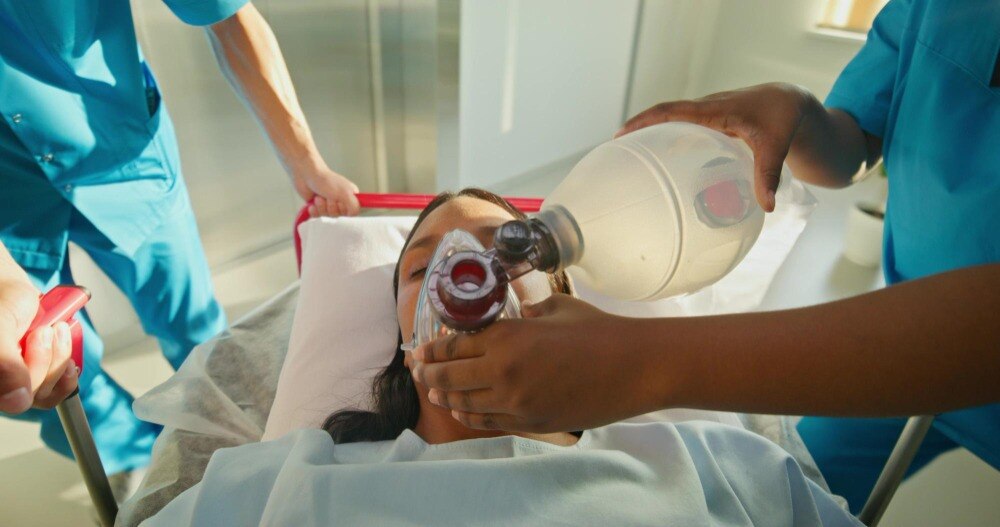
After a serious head or spine injury, the first decisions affect safety: how you call for help, whether you move the person, and what details you give clinicians. You will learn how to recognise deterioration, understand the first-hour tests and treatments, and judge when specialist neurosurgical or spine care is needed after stabilisation.
Key takeaways
- Call 112 and share Jaipur’s exact location and injury details.
- Keep the injured person still and hold the neck in its current position.
- Tell the emergency team about consciousness, breathing, paralysis, and injury mechanism.
- Ask how scans and neurological findings affect the need for surgery.
What should you do before help arrives?
Call 112 India and give the dispatcher Jaipur’s exact location, the injury mechanism, consciousness level, breathing status, and any paralysis. This is the first aid for head injury and suspected spinal trauma: keep the person still and keep the neck in its current position after a suspected cervical injury.
Do not move the injured person unless fire, traffic, building collapse, or another immediate danger makes movement necessary. Do not encourage walking or forcefully manipulate the spine. Press gently on visible bleeding with a clean cloth, but do not press over a suspected skull fracture or push bone back into place.
Ambulance versus private transport Jaipur:
| Option | Use it when | Why |
|---|---|---|
| Ambulance | Unconscious, confused, repeatedly vomiting, seizing, paralysed, breathing abnormally, in shock, or unable to sit safely | The crew provides controlled alignment, airway support, and monitoring |
| Private car | Only when the person is fully alert, breathing normally, has no weakness or numbness, and emergency transport is unavailable | Keep the person lying flat and supported; never use a motorcycle or sitting position for suspected spinal injury |
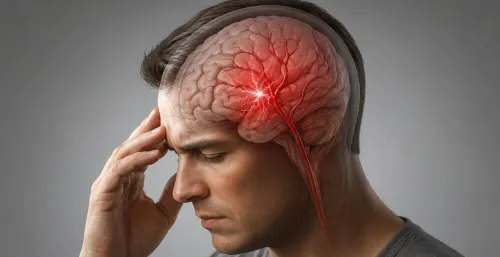
Emergency transfer is required for loss of consciousness, worsening headache, unequal pupils, repeated vomiting, seizure, confusion, one-sided weakness, clear fluid from the nose or ear, new numbness, or loss of bladder control. An alert person can still have an expanding bleed or unstable spinal injury.
What should the family tell the emergency team?
During the first hour trauma care follows an ABCDE trauma assessment: clinicians secure the airway, correct low oxygen, check blood pressure and pulse, control external bleeding, assess disability, and protect the cervical spine. They check pupil size and reaction, limb strength, sensation, speech, and alertness.
Tell the team:
- The exact injury time and mechanism, including whether the head struck a surface.
- How long the person was unconscious, every vomiting episode, and any seizure.
- New or worsening weakness, numbness, speech trouble, confusion, or reduced alertness.
- Previous brain or spine disease and the person’s usual ability to walk, speak, and think.
- Allergies, prior CT or MRI scans, and every medicine, using strips or a written list.
The Glasgow Coma Scale records eye opening, verbal response, and motor response. A Glasgow Coma Scale serial assessment, especially tracking the motor score, reveals deterioration better than one score; falling consciousness or a new unequal pupil can indicate expanding intracranial bleeding.
| Finding | Tell the team | Why it matters |
|---|---|---|
| Unequal pupils | Which pupil changed and when | May indicate rising pressure or bleeding |
| Reduced movement | Which limb became weak and when | Helps identify neurological deterioration |
| Anticoagulants after head injury | State aspirin, clopidogrel, warfarin, apixaban, or another blood thinner | Changes bleeding risk and urgent treatment decisions |
| Loss of consciousness | Give its duration and recovery pattern | Helps grade injury severity |
Stay with the patient so staff can clarify the timeline.
Which injuries and scans explain the danger?
Doctors distinguish a concussion, a skull fracture, and haemorrhage by combining the neurological examination with imaging. A concussion is a functional brain disturbance without bleeding visible on routine CT. A skull fracture is a break in bone; epidural, subdural, subarachnoid, and intracerebral haemorrhages are blood in different anatomical compartments.
| Injury or scan | What it shows | Main danger |
|---|---|---|
| Concussion | Functional brain disturbance | Symptoms despite a normal routine CT |
| Skull fracture | Broken skull bone | Direct brain injury or associated bleeding |
| Epidural haemorrhage | Blood between skull and dura | Rapid pressure build-up |
| Subdural haemorrhage | Blood beneath the dura | Compression that can worsen gradually |
| Subarachnoid haemorrhage | Blood around the brain | Irritation, swelling, or vessel complications |
| Intracerebral haemorrhage | Blood within brain tissue | Tissue destruction and rising pressure |
Someone can seem well before swelling or bleeding worsens, particularly after anticoagulant use or a minor fall in an older adult. Do not treat a normal first impression as proof of safety.
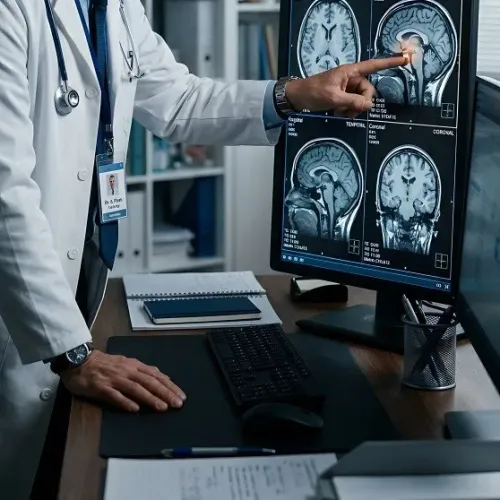
Non-contrast CT head is usually the first brain scan in trauma because it quickly shows acute blood, skull fracture, mass effect, and midline shift. For non-contrast CT head trauma assessment, remember that a normal result does not exclude every concussion, ligament injury, or delayed complication.
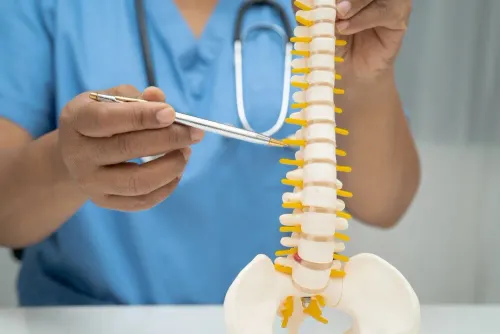
CT cervical spine defines many vertebral fractures and alignment problems. CT angiography trauma assessment looks for vessel injury when the mechanism or fracture pattern raises that concern.
MRI spinal cord injury assessment takes longer but better shows cord damage, disc injury, ligament disruption, epidural haematoma, and selected brain injuries, so it suits a stable patient or an unanswered neurological problem. Observation and explicit return precautions still matter after a normal CT.
When does a head or spine injury need surgery?
An operation is considered when bleeding, pressure, spinal-cord compression, or instability threatens the brain or spinal cord. The epidural haematoma surgery threshold is an acute collection larger than 30 cm³, which the Brain Trauma Foundation recommends evacuating regardless of Glasgow Coma Scale (GCS).
An acute subdural haematoma thicker than 10 mm or causing more than 5 mm acute subdural haematoma midline shift also meets an evacuation threshold regardless of GCS.
| Finding | What it may lead to | What clinicians assess |
|---|---|---|
| Brain bleed or swelling | Evacuation or pressure-control surgery | Pupils, falling GCS, seizures, progression and medical stability |
| Severe brain injury | Intensive-care pressure treatment | Intracranial pressure 22 mmHg and cerebral perfusion pressure target of 60–70 mmHg |
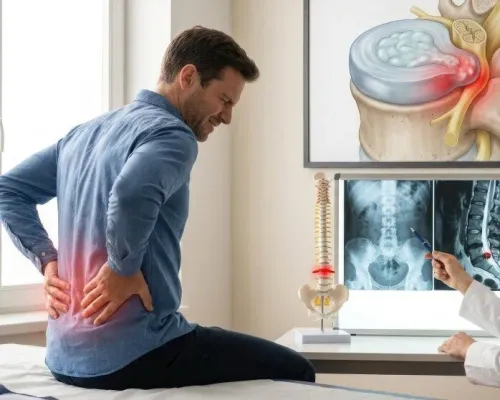
| Vertebral or cord injury | Observation, decompression or fixation | Weakness, instability, alignment, canal compromise and cord compression |
These brain-pressure numbers apply to selected severe traumatic brain injuries, not uncomplicated concussion. A spinal fracture or cord injury does not automatically require surgery; CT shows many fractures, while MRI better reveals cord, disc, ligament and epidural haematoma damage.
Early spinal cord decompression within 24 hours is an option for medically suitable adults, but it cannot restore tissue already destroyed. High-dose methylprednisolone is not routine: selected adults may receive a 24-hour infusion started within 8 hours.
AO Spine guidance discourages starting it after 8 hours or using a 48-hour infusion because complications must be weighed.
- Seek emergency reassessment for new weakness, numbness, saddle anaesthesia, loss of hand function, or bladder or bowel loss.
How should you choose ongoing trauma care in Jaipur?
After emergency stabilisation, choose a centre that can monitor change rather than simply complete an operation. For neurosurgical trauma care Jaipur families should ask whether the hospital provides 24-hour CT, monitored or intensive care, serial neurological examinations, neurosurgical review, spine surgery, and a rehabilitation plan.
Ask these questions before transfer or admission:
- Can a neurosurgeon review the examination and scans?
- Can staff repeat CT or MRI if weakness, confusion, vomiting, or reduced alertness develops?
- Who will coordinate spine trauma rehabilitation after discharge?
Care continues beyond surgery. Teams prevent low oxygen and low blood pressure, maintain spinal alignment, reduce pressure injuries and venous thrombosis, manage seizures when indicated, and begin rehabilitation early. Surgery can remove compression or stabilise an unstable spine; it cannot reverse cord or brain tissue already destroyed.
Minimally invasive versus open spine surgery is a selection decision, not a promise of easier recovery.
| Option | What it means | When it applies |
|---|---|---|
| Tubular, percutaneous, or endoscopic | Smaller access route with less muscle dissection in selected cases | Suitable anatomy, limited compression, or focused stabilisation |
| Open surgery | Wider exposure for decompression or reconstruction | Major instability, deformity, extensive compression, or multilevel trauma |
Once stable, Dr. Deepak Bariya can help compare decompression, fixation, observation, and rehabilitation against the neurological findings and scans.
Before discharge, obtain written post-trauma discharge precautions covering medication, activity limits, follow-up timing, and a named contact for new headache, vomiting, confusion, weakness, numbness, seizure, or bladder changes.
Related service
Head And Spine Injury Treatment Head and spine injuries are medical emergencies that require immediate attention and expert care. View service → |
Frequently asked questions
What should you do before help arrives after a suspected head or spine injury?
Call 112 India, provide Jaipur’s exact location, and report the injury mechanism, consciousness level, breathing status, and any paralysis. Keep the person still and keep the neck in its current position.
What should the family tell the emergency team?
Describe what caused the injury, when it happened, whether the person lost consciousness, how they are breathing, and whether they have weakness or paralysis.
Which injuries and scans help explain the danger?
The emergency team assesses the head, neck, spine, consciousness, breathing, movement, and sensation. Imaging scans then help identify injuries that could require urgent specialist treatment.
When does a head or spine injury need surgery?
Surgery is considered when the injury causes dangerous pressure, structural damage, spinal instability, worsening neurological signs, or compression that cannot be safely managed with observation and non-surgical care.