Sciatica describes pain associated with irritation or compression of the sciatic nerve pathway, commonly originating from nerve roots in the lower spine. The pain may travel from the lower back or buttock into the thigh, calf, or foot.
When episodes repeatedly return or symptoms become persistent, evaluation by a Sciatica Treatment Specialist can help identify the underlying cause rather than repeatedly treating the pain alone.
For people in Churu, the key is determining why the nerve is irritated and whether neurological function is being affected.
Sciatica Is a Symptom Rather Than One Disease
Different spinal problems can produce sciatic-type pain.
Possible causes include:
- Lumbar disc herniation
- Spinal stenosis
- Degenerative narrowing
- Structural compression around a nerve
- Certain spinal injuries
Because the causes differ, treatment should not be identical for every patient.
Pay Attention to the Pattern
Specialists often learn a great deal from the distribution of symptoms.
Pain may be sharp, burning, electric, or aching. Some patients experience numbness or pins and needles.
Important questions include:
- Does pain extend below the knee?
- Which toes feel numb?
- Is one leg weaker?
- Does coughing or straining worsen symptoms?
- Does walking trigger pain?
- Does sitting change the symptoms?
These details can help identify the affected nerve.
Recurring Pain Deserves Investigation
A single episode may improve with conservative care. Repeated episodes, however, can justify further assessment, particularly when they interfere with work, sleep, walking, or routine activities.
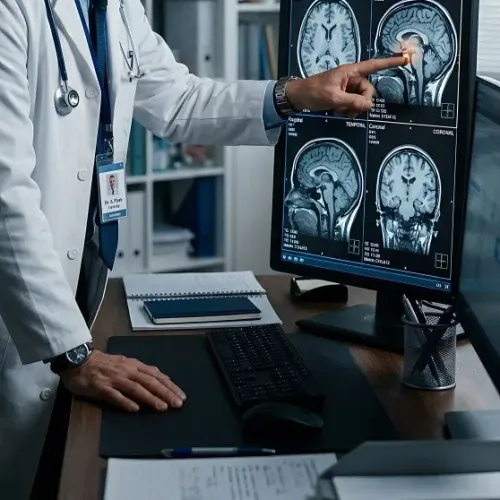
Evaluation may include neurological examination and, when clinically indicated, MRI imaging.
The purpose is to identify whether a structural abnormality is repeatedly irritating or compressing a nerve.
Know Which Symptoms Matter Most
Pain intensity is important, but neurological loss deserves particular attention.
Seek medical assessment when sciatica is associated with increasing numbness, muscle weakness, difficulty lifting the foot, or worsening mobility.
Sudden bladder or bowel dysfunction or numbness around the groin requires urgent medical attention.
Avoid Making Treatment Decisions From MRI Terminology
Terms such as “disc bulge,” “prolapse,” and “degeneration” can cause unnecessary anxiety.
Imaging findings need clinical interpretation.
A disc abnormality matters most when its location and severity correspond with the patient's symptoms and neurological examination.
When Is Surgery Considered?
Many patients with sciatica do not require surgery.
Conservative treatment may be appropriate when symptoms are manageable and neurological function remains stable.
Surgery may be considered when significant nerve compression causes persistent disabling pain despite appropriate treatment or when neurological weakness develops.
The procedure selected depends on the cause of compression.
Finding the Right Treatment Path
Patients seeking assessment for recurring sciatica in Churu can consult Dr. Deepak Bariya for evaluation of neurological symptoms related to the spine.
A useful specialist assessment should answer three questions: what is causing the sciatica, whether the nerve is being significantly affected, and which treatment offers a reasonable balance between benefit and risk.
Repeated pain should not automatically lead to surgery, but neither should progressive neurological symptoms be ignored. Identifying the underlying cause is the most important step toward selecting appropriate treatment.
Keywords