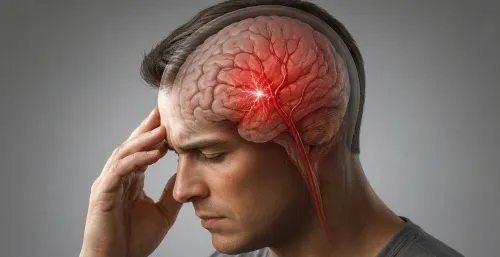
The skull base is one of the most anatomically complex areas of the human body. It forms the floor beneath the brain and contains important nerves and blood vessels travelling through small openings in the skull. Conditions developing in this region can therefore require particularly careful assessment.
A Skull Base Surgeon evaluates the relationship between a lesion and nearby neurological structures before deciding whether surgery, monitoring, or another form of treatment is appropriate.
For patients in Gangapur referred for a skull base abnormality, understanding this complexity can make specialist discussions easier.
Why the Skull Base Requires Specialized Planning
Important structures concentrated around the skull base can influence vision, hearing, facial movement, swallowing, balance, and other neurological functions.
Blood vessels supplying the brain may also lie close to certain lesions.
This means treatment planning involves more than determining the size of an abnormality. Its exact location and relationship with surrounding structures can be equally important.
Conditions That May Affect the Skull Base
Different abnormalities can develop around this region.
Examples include selected:
- Meningiomas
- Pituitary-region lesions
- Schwannomas
- Other skull base tumors
- Cysts
- Bone abnormalities
- Vascular lesions
Symptoms vary according to which structures are affected.
Some patients may experience headaches, while others develop visual changes, hearing difficulties, facial numbness, imbalance, swallowing problems, or hormonal symptoms.
Imaging Plays a Central Role
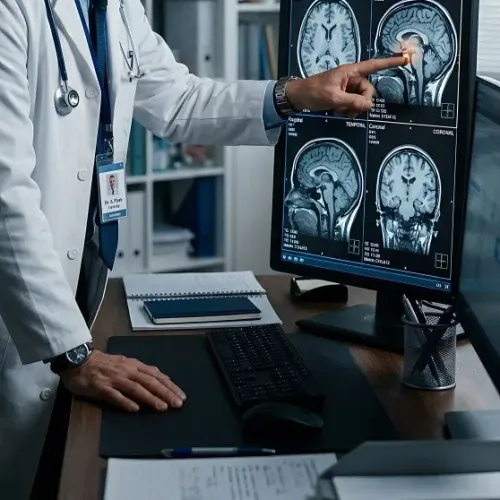
MRI and CT imaging help define the anatomy of a skull base lesion.
MRI can provide detailed information about soft tissues, nerves, and surrounding brain structures. CT can be useful for evaluating bone anatomy. In selected situations, additional vascular or other specialized imaging may be required.
A specialist interprets these investigations together with the patient's symptoms and neurological findings.
Surgery Is Not Automatically Required
An important point for patients to understand is that identifying a skull base lesion does not always mean immediate surgery.
Management may depend on:
- Type of lesion
- Size
- Growth over time
- Symptoms
- Location
- Neurological effects
- Patient's overall health
Small or stable abnormalities without significant symptoms may sometimes be monitored with follow-up imaging.
Other lesions require active treatment because of growth, pressure on important structures, or progressive neurological problems.
Surgical Approach Depends on Anatomy
There is no single operation used for every skull base condition.
The route selected depends on where the lesion is located and what structures surround it. Modern planning aims to obtain the required surgical access while protecting critical neurological structures as much as possible.
Microsurgical techniques and specialized visualization can assist with precise dissection in selected cases.
Questions Families Should Discuss
Before treatment, patients and families can ask:
- What type of lesion is suspected?
- Which neurological structures are involved?
- Is observation reasonable?
- What is the objective of surgery?
- What are the major neurological risks?
- Could additional treatment be required?
- What follow-up will be needed?
These questions help turn a complex diagnosis into a more understandable treatment plan.
Specialist Assessment for Skull Base Conditions
People in Gangapur who have been diagnosed with or are being investigated for a skull base abnormality may seek neurosurgical assessment from Dr. Deepak Bariya.
Because these conditions differ greatly in behaviour and anatomy, treatment should be individualized rather than based on a standard surgical formula.
Careful imaging review, neurological examination, understanding the likely diagnosis, and evaluating the risks of both intervention and observation are essential steps before deciding how a skull base condition should be managed.
Keywords