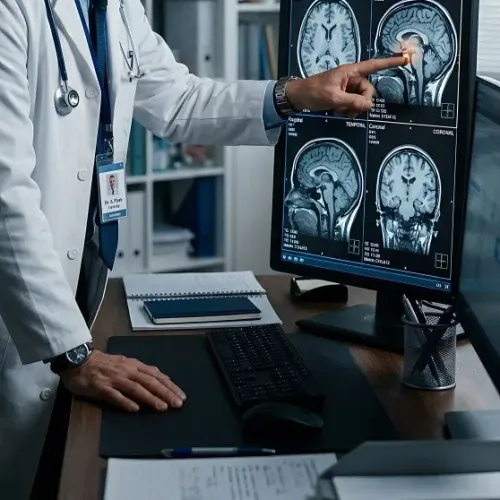
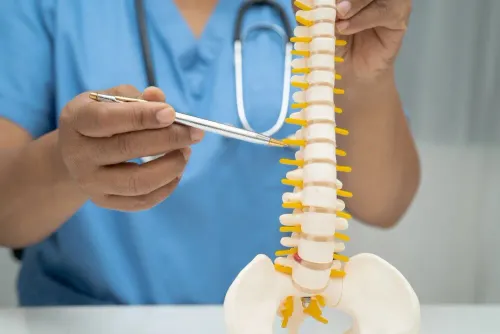
A lumbar MRI showing a slipped or herniated disc can sound alarming. Yet the presence of a disc herniation does not automatically mean surgery is necessary.
A Lumbar Spine Surgeon considers symptoms, neurological findings, imaging, response to previous treatment, and the effect on everyday function before recommending an operation.
For patients in Kotputli, understanding this evaluation process can help prevent decisions based solely on an MRI report.
Where Is the Pain Going?
The location of pain provides useful diagnostic information.
A lumbar disc affecting a nerve can cause pain extending from the lower back into the buttock, thigh, calf, or foot.
The specialist may ask whether the pain is accompanied by:
- Tingling
- Numbness
- Burning sensations
- Leg weakness
- Difficulty lifting the foot
- Changes in reflexes
The pattern helps determine whether a particular nerve root is involved.
Does the MRI Match the Symptoms?
This is one of the most important questions.
Disc bulges are common, particularly as people age. Some cause significant nerve compression while others may produce no symptoms.
If the location of the disc problem corresponds with the patient's neurological symptoms and examination findings, the scan becomes more clinically meaningful.
Treatment should therefore focus on the patient rather than the MRI report alone.
Has Appropriate Conservative Treatment Been Tried?
When there is no urgent neurological deficit, many patients may initially receive non-surgical care.
This can include medication, activity modification, physiotherapy, gradual rehabilitation, and follow-up.
Some disc-related symptoms improve as inflammation settles and the affected nerve recovers.
Surgery is more likely to be discussed when disabling symptoms persist despite appropriate conservative management.
Is Weakness Developing?
Progressive weakness changes the clinical picture.
Difficulty lifting the foot, standing on the toes, climbing stairs, or performing other movements can indicate impaired nerve function.
The degree and progression of weakness may influence how quickly intervention should be considered.
Are Emergency Symptoms Present?
Certain symptoms require urgent assessment.
Loss of bladder or bowel control, numbness around the groin region, or rapidly developing significant weakness can occasionally indicate severe compression of the nerves in the lower spinal canal.
These symptoms should not be managed as routine back pain.
What Is Surgery Intended to Achieve?
When surgery is appropriate for a lumbar disc problem, the objective is generally to relieve pressure on the affected nerve.
The exact technique depends on the location and nature of the compression.
Patients should ask which symptom is expected to improve most. Surgery aimed at nerve compression may have different effects on radiating leg pain, numbness, weakness, and nonspecific lower-back discomfort.
Making the Decision Carefully
Dr. Deepak Bariya evaluates patients seeking lumbar spine care in Kotputli using symptom history, neurological examination, and imaging correlation.
A recommendation for surgery should have a clear clinical reason.
Patients should understand why the disc is considered responsible for their symptoms, whether further conservative care is reasonable, what neurological risks exist if the condition progresses, and what surgery is expected to accomplish.
A lumbar disc diagnosis does not by itself determine treatment. The right decision comes from understanding how the structural problem is affecting the individual patient.
Keywords